5 Days Of Green Valleys, Berber Villages & A Climb To The Top Of Toubkal
This trek is fully supported by a local Berber team, including a mountain guide, cook, muleteers and mules to carry your luggage and equipment.
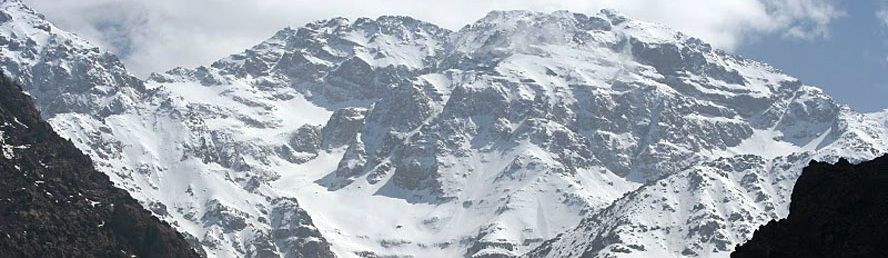
Morocco is only a three-hour flight from the UK and the High Atlas Mountains near Marrakech offer some of the finest adventure trekking in Morocco. This stunning five-day trek takes you through a variety of landscapes, from lush green valleys to rugged mountain terrain. The route passes through colourful Berber villages and crosses scenic mountain passes, gradually ascending to our highest point at 4,167m – the summit of Mount Toubkal, the highest mountain in North Africa.
Nights are spent in traditional village gîtes (Berber homes), with mountain huts used for the final two nights as we climb higher into the Toubkal Massif.
This trek runs all year round and can depart on any date of your choice.
We usually have several treks departing each week that you can join if you wish, so please get in touch!
All of our mountain treks can be combined with other tours and experiences, including trips to the Sahara Desert, Morocco’s Imperial Cities or the Atlantic Coast.
Pick Up & Drop Off
Le recogeremos en su alojamiento en la ciudad de Marrakech; muchos riads no tienen acceso para coches, por lo que el conductor aparcará cerca y vendrá a buscarle.
Lo dejarán en el punto más cercano a su riad/hotel. Nuestro conductor puede llamar a su riad para que lo reciban si es necesario.
Route Details
Day 01
Marrakech –imi oughlad –tizi n’tachte –Tiziane
We make an early morning departure from Marrakech for a pleasant drive south, winding through the Moulay Brahim Gorge and upper valleys before reaching the higher foothills of the Western High Atlas Mountains and our trailhead at Imi Oughlad (1,450m). Ahead of us, Jebel Toubkal (4,167m), the highest peak in North Africa, together with Aglzim (3,650m) and Aksoual (3,847m), rise dramatically above the surrounding mountains.
Here, we leave our vehicle and meet our Berber muleteer team. We set off north-west for a two-hour acclimatisation hike along winding mule tracks, passing cornfields and forests of pine and juniper before reaching Tizi n’Tachete (2,000m). From here, we can look back over the Imlil and Aït Oussaden Valleys before continuing for another half hour to Imi n’Ifri, where we stop for a field picnic.
We then continue with a gentle two-and-a-half-hour descent south-west along a dirt track, following the Assif n’Aït Oussaden to the red-clay terraced Berber village of Tiziane (1,750m), where we’ll spend the night in a bivouac or village gîte.
Día 02
Tizziane – Tizi n’Taghrhourte – D’knt
Después de nuestro desayuno, partimos en una caminata por el valle de Assif n'Aït Oussaden, pasando por bosques de nogales antes de subir a Tizi n'Taghrhourte (1.995 m). Desde el paso, el sendero continúa a lo largo de un tramo poco común, casi plano, para llegar al manantial de Assaka, donde nos detendremos para un picnic campestre rodeados de una atmósfera de paz y silencio después de unas dos horas y media de caminata relativamente fácil.
Por la tarde, continuamos nuestra caminata por el borde del bosque hasta llegar al pueblo bereber de D'knt (1.870 m), también conocido como Agouns n'Assoul. Aquí, disfrutaremos de la cena antes de pasar la noche en un vivac o en una casa rural del pueblo.
Día 03
D’knt – Tizi n’tagdalte – Azib n Tamsoult
Salimos después del desayuno para una caminata matutina de tres horas, subiendo a través de bosques de nogales y campos de maíz y cebada. En el camino, nos encontraremos con pastores locales de ovejas y cabras, así como con mujeres y niños cargando pesados fardos de leña y hierbas secas, un vistazo a la forma de vida tradicional en las montañas del Alto Atlas.
Cruzamos el paso de Tizi n’Tagdalte antes de descender a través de un fragante bosque de enebros hasta un pequeño manantial escondido entre los árboles, donde nos detendremos para hacer un picnic y tener la oportunidad de descansar en el entorno tranquilo.
Refrescados, continuamos por senderos de montaña sinuosos durante unas tres horas, descendiendo gradualmente las laderas superiores hasta llegar a un pequeño río en la cabecera del valle de Assif n’Aït Oussaden. Desde aquí, el sendero conduce al pueblo bereber tradicional de Tizi Oussem (1.850 m), antes de continuar subiendo hacia el pueblo de verano de Tamsoult, donde pasaremos la noche en un campamento o en un refugio de montaña.
Día 04
Âazib Tamsoult - Tizi Aguelzim - Refugio Toubkal
After breakfast, we set out eastwards on a moderately challenging hike, following winding mule tracks towards Tizi Aguelzim (3,550m). From the pass, we continue for a further three hours south-east towards the Toubkal Refuge (3,207m), marking the edge of the spring snowline and bringing us into the high-altitude landscape of the Toubkal Massif.
On arrival at the refuge, we’ll settle in, enjoy dinner and spend the night camping in a bivouac near the Toubkal Refuge.
Día 05
Refugio del Toubkal - Cumbre del Jebel Toubkal - Sidi Chamarouch - Imlil - Marrakech
Después de un desayuno muy temprano, partimos alrededor de las 6 a.m. para el desafiante ascenso a la cumbre del Monte Toubkal (4.167 m), el pico más alto del norte de África. Tras aproximadamente tres horas de empinada subida, llegamos a la cumbre, donde seremos recompensados con espectaculares vistas panorámicas de las montañas del Alto Atlas y los paisajes circundantes.
Cuando estés listo, comenzamos nuestro descenso a través del Ikkhibi Sud, o Circo Sur. Acompañado por tu guía de montaña, el descenso toma alrededor de 2 a 3 horas y conduce de regreso al Refugio Toubkal, donde pararemos para un merecido almuerzo tipo picnic.
Después del almuerzo, continuamos hacia el norte a lo largo de senderos empinados y en zigzag, descendiendo a través de las laderas superiores del valle de Assif n’Isouhouanem n’Ouagounss hacia el santuario de Sidi Chamharouch. Situado junto a una cascada, este lugar de peregrinación tradicional es un importante punto de referencia local.
Desde Sidi Chamharouch, otras dos horas de descenso nos llevan al pueblo de Imlil, el punto de partida para muchas caminatas por las montañas del Atlas. Desde aquí, nos reuniremos con nuestro vehículo y regresaremos a Marrakech.
Nota: Este itinerario es una guía y puede modificarse para adaptarse a las condiciones locales.
Equipment
Please ensure you have packed all safety essentials. See the Equipment List here if you're unsure of what to bring. Our guides will conduct a final gear check in Imlil before we commence the ascent to the higher altitudes of the Toubkal massif.

Tour Rates
Flexible Pricing
1 person 540€/Person
2-3 people 390€/Person
4-7 people 350€/Person
8-12 people 300€/Person

What Is Included?
-
Expert, Berber, English-speaking mountain guides
-
Mules and muleteers to carry your luggage
-
Berber Cook
-
All meals on the hike
-
Accommodation in a Berber village (gite)
-
Round-trip Transportation between the trek and your accommodation in Marrakech .
-
Camping Materiels ( Tents & Mattress) for summer treks.
What Is Not Included
-
Travel insurance.
-
Soft/alcoholic drinks
-
Tips and personal expanses
Accommodation & Shelters
The Accommodation will be in a simple berber Gites at Tiziane Village & D'kent and Tizi oussem
Camping is an option if prefered (june-Octo).
NB : If accommodation is required in the Atlas Mountains either before or after the trek, we can always book you at our Guesthouse Dar Adrar in Imlil or in our Eco-loge in Ouirgane


Clothing & Essential Equipment
Essential Equipment
Can Be Hired From Us
-
Good walking boots and socks / good trainers for valley treks
-
Personnel First aid Kit
-
Ice axes and crampons (winter)
-
3 to 4 season sleeping bag ( winter) or light Sleeping bag ( Summer)
-
Lightweight waterproof over-trousers / rain-pants
-
Water bottle or camel back (recommended)
-
Soft-sided bag (50-80 litres)
-
Lightweight daypack
-
Sunglasses
-
Sunscreen
-
Torch and batteries
-
Towel & all personal toiletries
-
Crampons : 5 €/ Day/pair
-
Ice Axe : 3 €/day
-
Walking boots : 5 €/day
-
Sleeping bags : 2.5 €/day
-
Rain Jackets : 3 €/day
-
Walking Poles : 3 €/day/pair
-
Back packs : 3€/day
-
Stoves : 2€/day
What Is Appropriate Attire In Morocco?
Morocco is a conservative and religious country, which means you always need to be mindful of your clothing choices. This is especially true in the country’s more rural areas, which include the Sahara Desert and its surrounding villages. As a general rule of thumb, you should always attempt to cover body parts considered “private”. For women, this means covering the arms (or at least the shoulders) and the knees up. For men, it requires covering up the shoulders and above the knee.

High Energy Meals
Meals on the trek are cooked by the Berber muleteers. The food is fresh and healthy. Example meals:
Breakfast: Jam, bread, cookies, fruit, juice, butter, coffee, milkLunch: salad, tomatoes, carrots, lentils, beans, rice or pasta, fish (sardines, tuna), seasonal fruit
Dinner: Soup, classic Morooccan tajine, couscous, olives, nuts, fruit
Can my dietary requirements be catered to?
Absolutely. Just let us know about your catering preferences when you confirm your booking to ensure any dietary requirements are met. Please remind as well your guide and cook on first day of the trek.
Start Your Journey
Ready to explore the Atlas Mountains? Reach out to us for detailed trek inquiries, tailor-made itineraries, or any questions about our Berber-led adventure tours.
Email: aztat.trek@gmail.com
Phone: +212 668-760165
Location: Imlil, Morocco
Personal baggage, cooking equipment and food are carried by the mules, leaving you to carry only a rucksack with whatever you need close at hand for the day. NB: Left luggage or unnecessary luggage can be left safely in our storage in Imlil till you come back from the trek.